
Equine assisted therapy (EAT) is a mental health treatment approach that incorporates horses into the therapeutic process. Sessions involve ground-based activities, not riding, led by a licensed mental health professional working alongside an equine specialist. EAT is used with clients experiencing anxiety, trauma, depression, and behavioral disorders across all age groups.


If you’ve come across equine-assisted therapy and assumed it’s just horseback riding with a therapeutic angle, it’s more specific than that. Nobody’s learning to ride. EAT is a structured mental health approach, recognized by the Equine Assisted Growth and Learning Association (EAGALA), in which horses serve as active participants in the therapeutic process alongside a licensed clinician.
How Does Equine Assisted Therapy Work?
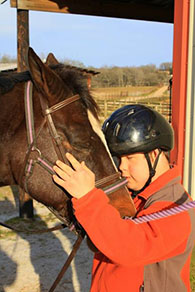
Every EAT session involves two professionals working together: a licensed mental health professional and a trained equine specialist. Neither operates alone. The therapist manages the clinical goals; the equine specialist handles the horses and helps interpret equine behavior. Both observe how the client interacts with the horses and use those observations to drive the therapeutic work.
Sessions are ground-based. Clients complete hands-on activities, including leading, grooming, and navigating obstacle tasks, rather than riding. What makes the approach clinical rather than recreational is the processing that follows. The therapist uses the client’s reactions, patterns, and behaviors during those activities to address the underlying treatment goals.
What Are the Benefits of Equine Therapy?
Horses are large animals. That’s not a trivial detail. For many clients, simply being near a horse and working through the natural discomfort is itself a therapeutic exercise in managing fear and building confidence.
Horses are also acutely sensitive to nonverbal cues. They respond to a person’s emotional state in real time, which makes them unusually effective feedback mechanisms. A client who is tense or withdrawn gets a different response from a horse than one who is calm and present. That immediate, non-judgmental feedback is difficult to replicate in a traditional office setting.
EAT has been used as an adjunctive treatment for anxiety, depression, PTSD, addiction, and behavioral disorders. It’s particularly useful for clients who find conventional talk therapy difficult or who respond better to experiential approaches.
What Does an Equine Therapist Do?
An equine therapist is, first and foremost, a licensed mental health professional. The equine component is an add-on to their clinical credential, not a replacement for it. In a standard EAGALA-model session, the mental health professional brings the therapeutic framework, case conceptualization, and clinical decision-making. The equine specialist manages horses and contributes expertise in equine behavior.
It’s worth being specific about what this role isn’t. An equine therapist isn’t a riding instructor or a stable manager. They’re a trained clinician, typically a licensed professional counselor (LPC), licensed clinical social worker (LCSW), marriage and family therapist (LMFT), or licensed psychologist, who has added equine-assisted work to their practice.
What Degree Do You Need to Practice Equine Assisted Therapy?
There’s no standalone equine therapy degree. The path runs through a licensed mental health credential first, then the EAT certification.
For most practitioners, that means a master’s degree in counseling psychology, clinical mental health counseling, social work, or marriage and family therapy, followed by the supervised hours and state licensure exam required to practice independently. Psychologists earn a doctoral degree and pass the EPPP. Once licensed, you can pursue EAGALA certification, which begins with its Fundamentals Training, followed by an assessment, portfolio requirements, and ongoing continuing education.
If you’re researching this as a career path, the first question isn’t “where can I study equine therapy?” It’s “which mental health degree fits where I want to practice?” The equine specialization comes after that.
Find accredited counseling, social work, and psychology programs by state, including licensing requirements and application links for your jurisdiction.