
The University of Iowa offers a PhD and an EdS in Psychological and Quantitative Foundations with a school psychology specialization. The doctoral program is accredited by the American Psychological Association (on Contingency) and regionally accredited by the Higher Learning Commission. UI is one of Iowa’s three public universities governed by the Iowa Board of Regents, located in Iowa City.


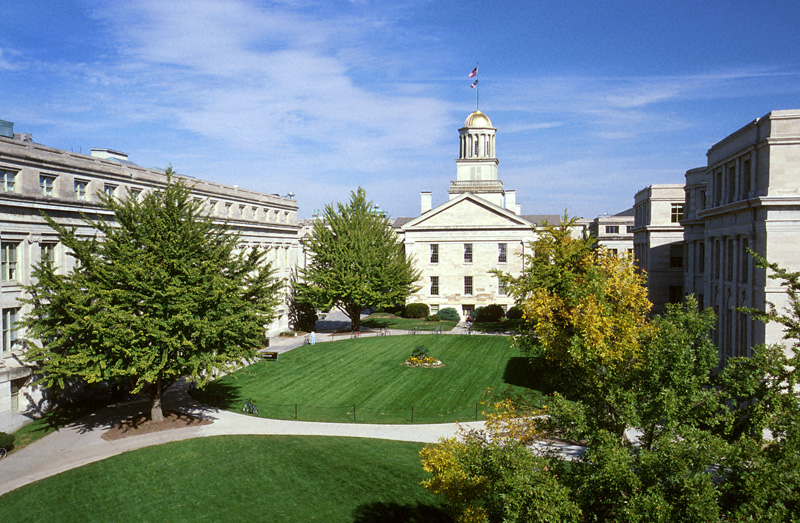
The University of Iowa was founded in 1847 as Iowa’s first public institution of higher learning and is located in Iowa City. It is one of three public universities governed by the Iowa Board of Regents, alongside Iowa State University and the University of Northern Iowa. Its psychology programs are housed within the College of Education’s Department of Psychological and Quantitative Foundations. To compare options at other institutions, see psychology doctoral programs in Iowa.
Accreditation Details
The University of Iowa is regionally accredited by the Higher Learning Commission (HLC), the accrediting body for degree-granting institutions across a 19-state Midwest and Plains region. HLC accreditation confirms that the university meets established standards for academic quality, faculty qualifications, and institutional governance. UI has maintained continuous HLC accreditation since 1913 and is a member of the Association of American Universities.
The School Psychology doctoral program holds specialized accreditation from the American Psychological Association (APA), on Contingency, with an expiration date of March 4, 2030. Questions about the program’s accredited status can be directed to APA’s Office of Program Consultation and Accreditation at [email protected] or (202) 336-5979.
Application Requirements
The School Psychology PhD program admits students in the fall semester only. The priority application deadline is December 1; faculty begin reviewing applications in January, with invited interviews scheduled in February. The application fee is $60 for domestic applicants and $100 for international applicants.
Applicants must hold a bachelor’s degree from a regionally accredited institution and a minimum undergraduate GPA of 3.0 on a 4.0 scale. Applicants with a graduate degree must show a graduate GPA of 3.5 or better. Required supplemental materials include official transcripts from all previous college work, a personal statement describing career objectives and research interests, three letters of recommendation, and an updated CV or resume. The GRE General Test is optional — the program does not apply a definitive cutoff score.
Tuition and Financial Aid
Graduate tuition at the University of Iowa is based on state residency. For 2024–2025, Iowa residents paid approximately $13,425 per academic year; out-of-state students paid approximately $32,372. The university estimates annual living expenses at $23,712 and books and supplies at $650 for graduate students in education programs. Tuition rates are set each summer by the Iowa Board of Regents and vary by program — check the UI tuition calculator at tuition.ais.its.uiowa.edu for the current per-credit-hour rate for the School Psychology program.
PhD students who hold a quarter-time or more teaching or research assistantship are classified as Iowa residents for tuition purposes and are assured a minimum tuition scholarship for the terms of their appointment. Students may also apply for federal financial aid through the FAFSA. The university administers work-study positions, scholarships, and subsidized and unsubsidized loans.
Psychology Programs at the University of Iowa
PhD and EdS in Psychological and Quantitative Foundations — School Psychology
The School Psychology program leads to a PhD or an EdS in Psychological and Quantitative Foundations. The doctoral program trains health service psychologists as scientist-practitioners, with coursework focused on the cognitive, behavioral, and mental health needs of children, adolescents, and their families. The PhD program holds APA accreditation on Contingency. The EdS program is designed to align with NASP preparation standards, though it is not currently NASP-accredited. Prospective students comparing costs can also browse our list of affordable school psychology programs.
Students complete supervised practicum hours in field placements coordinated by the program, working with Iowa schools, area education agencies (AEAs), the University of Iowa Hospitals and Clinics, and the Scanlan Center for School Mental Health. Research experience is also available through faculty-led projects.
Find accredited psychology programs in Iowa and other states, with application links and licensing information for your jurisdiction.