
Pennsylvania State University offers psychology programs at the undergraduate and graduate levels through its College of the Liberal Arts at University Park. Undergraduate students can earn a BA or BS in Psychology. Graduate study leads to the PhD in one of five specializations. Penn State is accredited by the Middle States Commission on Higher Education (MSCHE).


Penn State’s Department of Psychology is located at University Park, the university’s flagship campus in State College, Pennsylvania. The department has more than 80 faculty members across five doctoral program areas and more than 150 graduate students. Psychology is offered at the undergraduate level at University Park, several branch campuses, and through the World Campus online.
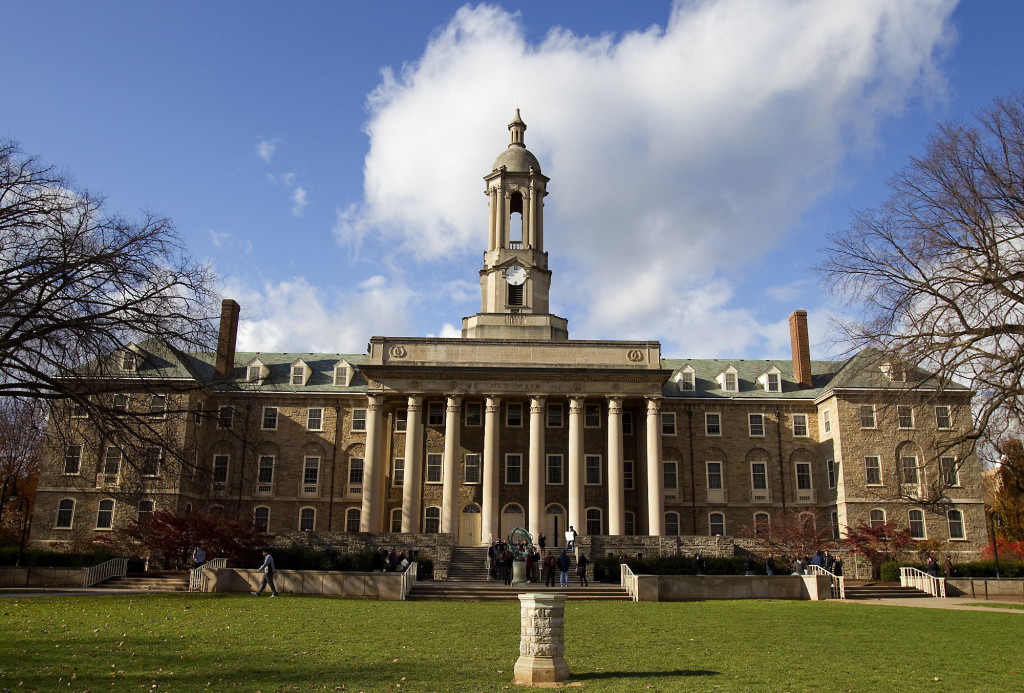
Pennsylvania State University Accreditation Details
Penn State is regionally accredited by the Middle States Commission on Higher Education (MSCHE), one of the seven regional accrediting bodies recognized by the U.S. Department of Education. Regional accreditation is the standard required for federal financial aid eligibility and is the benchmark used by graduate programs evaluating undergraduate transcripts.
The Clinical Psychology doctoral program (Adult and Child-Clinical tracks) holds dual accreditation from the American Psychological Association (APA) and the Psychological Clinical Science Accreditation System (PCSAS). The School Psychology doctoral program is accredited by APA, the National Association of School Psychologists (NASP), and the Pennsylvania Department of Education.
Application Requirements
The graduate psychology program at Penn State University Park admits students only to the PhD. The department does not offer a terminal master’s degree. The application deadline for all five doctoral areas is December 1 each year for fall enrollment. Applications are reviewed holistically, with no minimum GPA or GRE cutoff.
Required materials for graduate admission include:
- Statement of purpose (typically two pages; identify faculty whose research aligns with your interests)
- Official transcripts from all institutions attended
- Three letters of recommendation
- Writing sample (solo- or first-authored; a thesis, research proposal, or term paper)
- Current CV or résumé
- GRE requirements vary by doctoral area. Check the department’s admissions page for current testing requirements before applying.
- TOEFL or IELTS scores (international applicants only; minimum TOEFL iBT score of 80 overall, with at least 19 on the speaking section)
Applications are submitted through the J. Jeffrey and Ann Marie Fox Graduate School portal. See the Penn State Psychology admissions page for area-specific requirements and the current application checklist. Undergraduate applicants apply through Penn State’s standard undergraduate admissions process; a psychology major is not required for graduate admission, though most applicants have at least 12 psychology credits.
Tuition and Financial Aid
Undergraduate tuition for the 2026–2027 academic year is $22,520 per year for Pennsylvania residents and $46,812 for out-of-state students (All Other Programs rate; psychology falls under this category).
Graduate tuition for 2026–2027 is $26,486 annually for in-state students and $48,668 for out-of-state students, with per-credit rates of $1,104 (in-state) and $2,028 (out-of-state). Doctoral students admitted to the psychology PhD program typically receive full funding through teaching or research assistantships, including a stipend and tuition waiver, for up to five years.
Undergraduate financial aid options include federal grants (Pell, FSEOG, TEACH), loans, and work-study programs administered through Penn State’s Office of Student Aid. Students must complete the FAFSA to establish eligibility. Penn State met 67.4% of demonstrated financial need for full-time undergraduates, per the most recent Common Data Set.
Psychology Programs at Pennsylvania State University
Psychology programs at Penn State span the undergraduate and doctoral levels. There is no standalone master’s program in psychology at University Park. Graduate students enter directly into the PhD, earning an MS as an intermediate milestone.
BA and BS in Psychology
Penn State offers both a Bachelor of Arts and a Bachelor of Science in Psychology through the College of the Liberal Arts. The BA combines psychological theory and research within a liberal arts framework and includes a world language proficiency requirement. The BS adds Science and Business track options and is designed for students oriented toward research or applied settings.
Both degrees require a minimum of 120 credits. All courses counting toward the major must be completed with a grade of C or better. The psychology major is available at University Park, the World Campus, and several branch campuses. Students planning to pursue graduate study are strongly encouraged to seek research experience with department faculty.
PhD in Psychology
The doctoral program in Psychology at University Park leads to a PhD in one of five specializations: Clinical Psychology (with Adult and Child-Clinical tracks), Cognitive Psychology, Developmental Psychology, Industrial-Organizational Psychology, or Social Psychology. Students may also pursue a dual-title degree in Social and Behavioral Neuroscience, Women’s, Gender, and Sexuality Studies, or Language Science.
The Clinical program holds both APA and PCSAS accreditation. The I/O program is consistently ranked among the strongest in the country. All doctoral students are expected to engage in active research from their first semester, working with a faculty advisor on an individualized program of study. The program is designed for full-time students; coursework and practicum requirements are scheduled during standard academic hours.
School Psychology (PhD and MS)
Penn State’s School Psychology program is an intercollege doctoral program drawing on coursework in psychology, educational psychology, and special education. It prepares graduates to serve as school psychologists in K-12 settings, with training in evidence-based assessment, intervention, and consultation for children and youth. APA, NASP, and the Pennsylvania Department of Education accredit the program.
Students admitted with a bachelor’s degree complete the MS en route to the PhD. Applicants with a master’s degree from a school psychology or closely related program may be considered for direct PhD entry. Pennsylvania school psychologist certification requires meeting additional standards set by the Pennsylvania Department of Education, in addition to the degree itself. See education requirements for school psychologists for a full overview of the credentialing path.
Compare accredited psychology programs by state, degree level, and focus area to find the right fit for your goals.