
Montana has two APA-accredited doctoral psychology programs, both at the University of Montana in Missoula: a PhD in Clinical Psychology and a PhD in School Psychology. No in-state PsyD programs exist. Both PhDs follow the scientist-practitioner model and are designed to meet Montana education requirements for psychologist licensure, though applicants should confirm current standards with the state board.


Montana’s doctoral psychology options are concentrated at one institution, but that doesn’t mean the decision is simple. The University of Montana offers two APA-accredited PhD programs with different career tracks, and many Montana applicants are also weighing out-of-state or online options. Understanding the difference between PhD and PsyD programs is the right starting point.
PhD vs. PsyD: What Montana Applicants Need to Know
Both degrees lead to psychologist licensure and require passing the Examination for Professional Practice in Psychology (EPPP), but they’re built around different training models. A PhD follows the scientist-practitioner model, combining rigorous research training with clinical work. Programs typically run five to seven years, and most offer teaching or research assistantships that cover tuition and provide a stipend. Montana’s two APA-accredited doctoral programs are both PhDs.
A PsyD follows the practitioner-scholar model, with more emphasis on clinical hours and less on research. Programs tend to run four to five years and are more often tuition-funded. Montana has no in-state PsyD programs, so applicants pursuing that path need to look at accredited online programs or programs in neighboring states. Montana State University in Bozeman offers a PhD in Psychological Science, but it’s research-focused and not APA-accredited, which means it doesn’t meet the standard education requirement for psychologist licensure in Montana. For a closer look at how the two doctoral tracks compare, see our overview of the PsyD vs. PhD in psychology.
Montana Programs at a Glance
All programs listed below hold active accreditation from the APA Commission on Accreditation.
| School | Degree | Focus | Location |
|---|---|---|---|
| University of Montana | PhD in Clinical Psychology | Clinical practice and research, with an optional child/family or neuropsychology track | Missoula, MT |
| University of Montana | PhD in School Psychology | Assessment, intervention, and consultation in school and community settings | Missoula, MT |
University of Montana
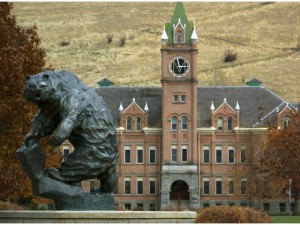
The University of Montana, located in Missoula, is the only institution in the state offering APA-accredited doctoral programs in psychology. The Department of Psychology runs a smaller program than departments at flagship universities in more populous states, and students consistently cite close faculty access as a defining feature of both programs. The department’s on-campus Clinical Psychology Center supports supervised client contact for doctoral students across both tracks, with particular attention to Montana’s rural mental health needs.
PhD in Clinical Psychology
The Clinical Psychology PhD is built on the scientist-practitioner model, integrating clinical training with empirical research. Students develop therapy and assessment skills while conducting research under faculty mentorship. The program can be completed on a standard clinical track or with a concentration in child, adolescent, and family psychology, or with exposure to neuropsychology. Most students complete the program in five to six years, including a year-long predoctoral internship. The program is continuously accredited by the APA Commission on Accreditation and is accepting applications for fall 2026, with a December 1 deadline.
Location: Missoula, MT
Program website
PhD in School Psychology
The School Psychology PhD trains students to deliver psychological and educational services to children, families, and school systems. Core competencies include cognitive and academic assessment, evidence-based intervention, consultation, and data-based decision-making. The program emphasizes preparation for serving rural communities and Montana’s Native American student populations, and students take on school-based and clinic-based placements beginning in the first year. The program runs approximately five years and concludes with a year-long supervised internship in a school, hospital, or outpatient setting.
The School Psychology PhD holds dual accreditation from the APA Commission on Accreditation and the National Association of School Psychologists (NASP). It is the only school psychology doctoral program in Montana. Applicants comparing costs across programs can browse our list of affordable school psychology degree programs for a national context.
Location: Missoula, MT
Program website
Montana’s limited in-state options make program fit more important than in states with many doctoral programs to choose from. Both University of Montana programs offer assistantships that typically include a tuition waiver and a stipend, which reduces the real cost of a five-to-six-year commitment considerably. Applicants who want a practice-focused PsyD or who need a program outside Missoula will need to look beyond the state, and our guide to affordable clinical psychology graduate programs covers accredited options across the country. The Montana Board of Psychology licensure requirements are the governing standard for what any program, in-state or out, needs to prepare you for.
Frequently Asked Questions
Does Montana have any PsyD programs?
No. Montana currently has no in-state PsyD programs, whether APA-accredited or otherwise. Applicants seeking a practice-focused PsyD will need to consider accredited online programs or programs in neighboring states such as Colorado, Washington, or Oregon. Many offer hybrid formats with limited residency requirements that can work for Montana residents.
What does Montana require for psychologist licensure?
Montana requires a doctoral degree from an APA-accredited program or one that provides comparable training, at least 3,200 hours of supervised experience, passing scores on the EPPP, and completion of the Montana Board of Psychology’s jurisdictional exam. Applicants should verify current requirements directly with the Board before enrolling, as standards can change.
What’s the difference between the clinical and school psychology PhDs at the University of Montana?
The Clinical Psychology PhD focuses on diagnosing and treating mental health conditions across adult, child, and family populations, with training in both therapy and psychological assessment. The School Psychology PhD specializes in assessment, intervention, and consultation within school and educational systems, with particular preparation for working in rural and Native American community contexts. Both follow the scientist-practitioner model and require a predoctoral internship, but they prepare graduates for different practice settings and licensure pathways.
Does Montana accept degrees from non-APA-accredited programs for licensure?
The Montana Board of Psychology accepts doctoral degrees from non-APA-accredited programs if the applicant can demonstrate curriculum equivalency. This requires additional documentation and review, and approval isn’t guaranteed. Applicants considering non-accredited programs should contact the Board directly before enrolling to understand what evidence of equivalency is expected.
Use the tool below to browse accredited psychology programs, including options outside Montana if in-state programs don’t match your goals.