Parapsychology is the scholarly study of psychic phenomena that have no accepted scientific explanation. The field is commonly described as covering five major areas: telepathy, clairvoyance, precognition, psychokinesis, and survival studies. It has real academic roots going back to the 1880s, though no researcher has yet produced evidence that convinces the broader scientific community these phenomena are real.


If you’ve filed parapsychology under “not a real thing,” you’re in good company. But the history is stranger than you’d expect. The Society for Psychical Research was founded in London in 1882 and counted William James and Lord Rayleigh among its members. Universities and research institutions, including Duke University and Stanford Research Institute (SRI), conducted formal research into extrasensory perception. The CIA funded the Stargate Project to test whether psychic abilities could be used for intelligence gathering. None of it produced the proof that moves science forward, but it hasn’t stopped people from looking.
What Do Parapsychologists Study?
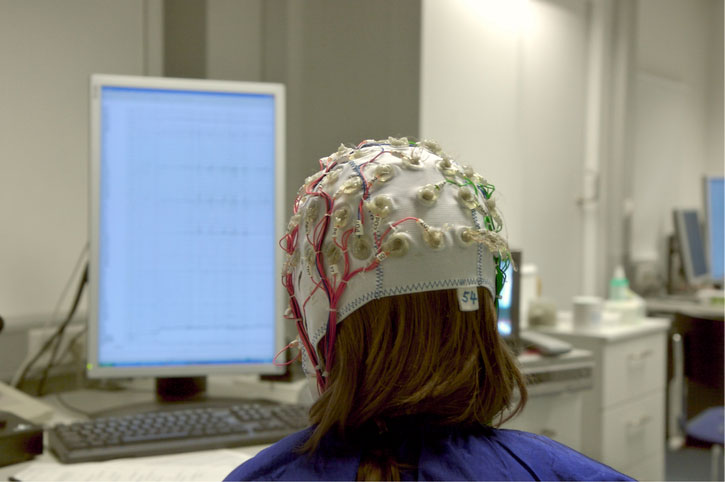
Most parapsychologists focus on human capabilities that have never been scientifically documented, using controlled experiments and statistical analysis to test whether those capabilities exist. And to clear something up: parapsychology is not astrology, Bigfoot research, witchcraft, or aliens. Popular media lumps it all together, but a parapsychologist would find that comparison about as flattering as a cardiologist being called a faith healer.
Telepathy
Telepathy is the study of whether minds can share thoughts or feelings without any known channel of communication. Researchers test this through controlled remote experiments where subjects try to transmit or receive information they have no ordinary way of accessing.
Clairvoyance
Clairvoyance is the study of whether a person can access information about distant events through means other than the known senses. Unlike telepathy, it doesn’t involve another person’s mind. It typically manifests as a vision or awareness of something the person couldn’t conventionally know.
Precognition
Precognition is the study of whether future events can be perceived before they happen. These are difficult to investigate rigorously because useful predictions need to be specific enough to actually falsify.
Psychokinesis
Psychokinesis, or PK, is the study of whether mental intention can affect physical objects or systems. It’s considered one of the more testable claims in parapsychology, since physical movement can be measured with reasonable precision.
Survival Studies
Survival studies investigate whether consciousness continues after death. This area is less defined than the others. Researchers spend considerable effort just establishing what would count as evidence, since there’s no widely accepted test for post-death experience.
Can You Get a Degree in Parapsychology?

In the United States, no accredited university offers a dedicated degree in parapsychology. Here’s what the options actually look like:
Bachelor’s: No parapsychology bachelor’s programs exist in the US. You’d pursue a degree in psychology and take whatever electives touch on the subject.
Master’s: Same situation. A master’s in psychology is the practical route.
Online: Certificate programs in parapsychology exist, but they’re not accredited and won’t qualify you for any licensed psychology career.
Ph.D.: A doctoral degree in psychology with a dissertation focused on parapsychological research is the most viable path for anyone serious about the field. Some psychology Ph.D. programs allow enough research flexibility to pursue this.
Outside the US, a handful of universities have maintained parapsychology research programs. The University of Edinburgh’s Koestler Parapsychology Unit is one of the best-known.
How Do You Become a Parapsychologist?
There’s no licensing board for parapsychology and no national certification. The general path looks like this:
- Earn a bachelor’s in psychology.
- Earn a master’s in psychology.
- Earn a Ph.D. in psychology, with research focused on parapsychology.
The harder question is what you do with the degree. Dedicated parapsychology research positions are rare, so most working parapsychologists hold academic or clinical roles and pursue the research alongside other professional work.
If you take the clinical route, you’re looking at real earning potential. According to the Bureau of Labor Statistics, clinical and counseling psychologists earned a median annual salary of $100,580 as of May 2025. See what clinical and counseling psychologists earn by state and specialization.
Select your state below to find accredited psychology programs, application links, and licensing requirements for your jurisdiction.
2025 US Bureau of Labor Statistics salary data and Projections Central 2022-2032 job growth forecasts for Psychologists (including Clinical & Counseling, Industrial-Organizational, and School Psychologists) and Substance Abuse, Behavioral Disorder, and Mental Health Counselors, reflect state and national data, not school-specific information. Conditions in your area may vary. Data accessed June 2026.